For the better part of the last two decades, we have been trying to find ways to incorporate the 4C’s of 21st-century learning into classrooms. Collaboration, communication, critical thinking, and creativity are all skills that we need to ensure that our students possess before they leave our buildings and go into their post-K12 lives.
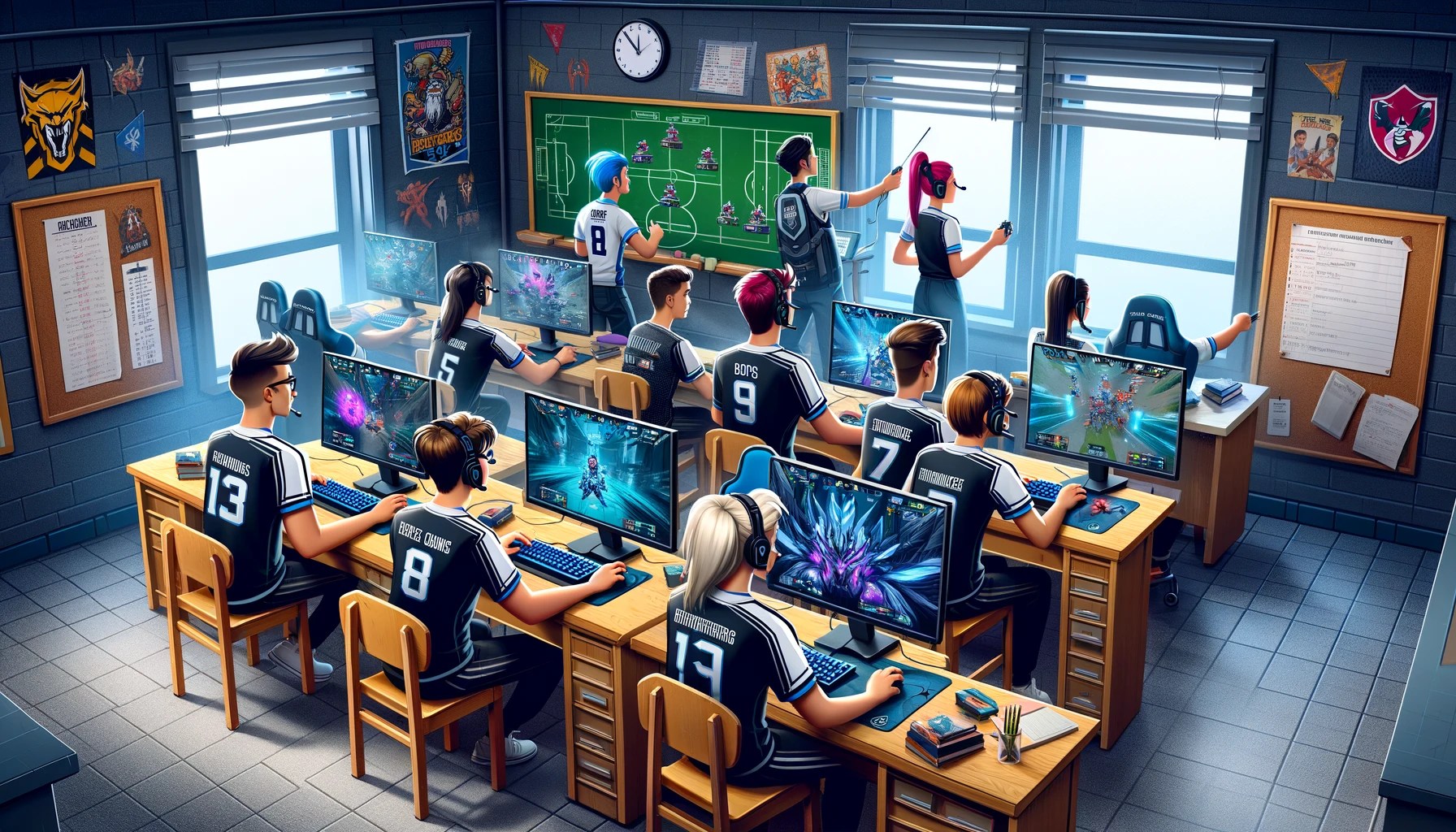
One area in which we can easily see the 4C’s embedded is actually in esports. Esports programs at high schools, and middle schools, are great ways to not only incorporate learning around the 4C’s but is easily one place where they can be applied in a daily fashion. The application of the 4C’s happens in a very authentic way throughout practices and competitions, as well as even outside of school but because it involves video games, many may overlook this fact.
Communication
The easiest component of the 4C’s to see in action in esports is communication. In any team game, the players need to be in active communication to be successful. The truly good teams have an advantage because they have worked on their communication skills to effectively and efficiently inform their teammates and coordinate their movements and attacks. Students do not always come in with the best communication skills in team games due to how they play and who they play with outside of school. If they are mostly accustomed to playing online with random people, not everyone talks and not everyone is focused on the same goal. This is different when it happens in a team environment at school as they have to be focused on the same goal and the coach can be supporting and teaching along the way. This is easily the first thing I focus on as a coach for esports as it is the bedrock of a great team. Without coaching, their communication skills may not be effective and will be an anchor to their growth.
Another way in which communication is a focal point is when we look at shoutcasting, live-streaming games with commentary. If your esports program is broadcasting your matches, having students be the main voices for that live stream will help them become better at communicating. Again, they will not have this skill at a high level when they start but having support and instruction along the way, allowing them to learn from others, and helping them to listen to themselves after the fact can lead to very authentic learning. Students may be so used to watching others play online and listening to them, that they might not have tried it themselves and there are so many skills related to communication that they can be working on with shoutcasting.
Collaboration
Since many esports titles involve a team-based environment, collaboration is an essential skill that can be grown throughout their time in esports. Overwatch 2 has five people on a team and they must learn how to work together throughout the matches to win. They can’t just focus on their own play but must focus on how they work as a team, what strategy they will use, and how to help each other adjust throughout matches to play as best as they can as a team. They have to work together, assigning different tasks and objectives to each other to ensure they are completing their goals. The coach should be helping them to plan this out, giving advice but also letting them make mistakes so they can learn from them. Each game, whether in practice or an actual match, is an opportunity to learn how to better work together as a team and if they are not working on their collaboration skills, they will fail more often than not.
It is not just the team-based games though that can support learning around collaboration. Takes Smash Ultimate for example where each player is playing 1 vs 1 in their matches, but the team wins by the total number of matches won. One great player can not win everything for the team so they must learn how to work with each other, help each other learn how to get better, and find a way to support each teammate through wins and losses. I saw a huge difference in the outcomes of one of my teams when they started to focus on helping each other out, identifying different objectives for each player and how to best support each other in their own goals. Once they were truly collaborating as a team, they found a lot more success and they even noticed that themselves. I am sure they would be able to take those skills they learned into areas beyond esports.
Creativity
Creativity is another skill that not only can help a team be successful and get the win, but it is very evident in the areas of shoutcasting. There are certain strategies or setups in every game that are the most commonly used as they tend to produce the best results, and the players know this. The problem is that everyone knows these metas and you have to learn how to adjust with new ideas and strategies throughout the game. Those teams who are the most creative will find ways to be successful even when their opponents may have better game skills. Being able to come up with a whole new game plan in the middle of a match can be the biggest decider between a loss and a win.
Shoutcasting provides another area in which students can apply their skills around creativity. Creating graphics and animations for live streams can be a great way to promote the team and get more people to watch the matches online. While it is very easy to have a basic live stream, great live streams make use of interesting graphics that engage the viewers but also communicate important information. There are even programs out there where students can create animated intros for the team. I have had students create graphics, logos, and other media that we use in our livestreams and when we promote the team using social media. Having students create the graphics will engage them in the creativity process and will mean more than if we just used the basic logos and graphics. I have even opened up the design of our esports team logo to students and then the players voted on which one they wanted to use. I then sent that logo out to get printed onto a sticker, something I know some schools can do themselves. Those stickers can be seen throughout the school which helps promote the program but also shows the students that their work matters.
Critical Thinking
The last of the 4C’s is definitely one of the most important that we see in esports. While students can get better playing round after round, it is when they have to analyze their gameplay and figure out how to improve those skills, that players go from being ok to being great. One reason I like to record as many matches as we can is to not just promote the program, but so that the students have something they can watch and learn from later. What they need to improve or how they can improve it, is not always easily seen. It takes a lot of critical thought in order for players to determine how to improve and what skills they are lacking. As a coach, my place is to ask questions to help guide them in this process but they need to be the ones to own this process if this skill is going to stick and be able to be used in the future.
My goal with esports is to not just to win games but to help students become better versions of themselves and give them opportunities they would not otherwise have. Students play a lot of video games outside of school but when we bring that into schools, we can create a learning environment that engages them in ways they would not be otherwise. Esports is a great way to have authentic learning opportunities that the students are seeking. They can learn skills that can be applied well beyond video games and we aren’t even talking about hand-eye coordination. We are talking about the skills that many employers say our students will need to be successful in their lives. Esports programs can create opportunities for students that can change the trajectory of their lives and this is not an exaggeration. Our students have received scholarship offers, gone on to play esports at college, and been able to apply the skills they learned to every aspect of their learning and their lives. My only regret is that we did not get these programs started earlier.
 Donovanscience